Discover industry updates, modern architecture guides, and technical insights on prefabricated modular homes.
Choosing the best Modular Sauna requires more than comparing prices and attractive timber panels. It means matching heat performance, space, safety, installation, and long-term maintenance with your actual routine. A compact cabin beside a garden door may look ideal, yet poor ventilation can create condensation, stale air, and damaged wood.
The wellness market continues to expand. The Global Wellness Institute’s 2024 Global Wellness Economy Monitor valued the global wellness economy at approximately $6.3 trillion in 2023. Its forecast approaches $9 trillion by 2028. Grand View Research also identifies steady growth in the global sauna market, with estimates varying by region and product definition. These figures show strong demand, but they do not prove that every Modular Sauna offers equal value.
Specifications matter more than marketing language. Check the heater’s certified output, electrical requirements, control system, insulation, bench height, and ventilation design. A 4.5-kilowatt heater may suit a small indoor cabin, while a larger outdoor unit may need substantially more power. Always confirm these figures with a qualified installer and the manufacturer’s documentation.
Real experience can expose details brochures miss. Ask how quickly the sauna reaches temperature, how evenly heat spreads across the upper bench, and whether replacement parts remain available. Inspect the door seal, floor protection, drainage, and wood finish. Warranty length matters, but warranty conditions matter more.
The data is useful, not perfect. Market reports often group traditional, infrared, commercial, and modular products together. A careful buyer should question broad claims and compare tested specifications. The best choice is not necessarily the largest or most expensive model. It is the one that safely fits your room, habits, budget, and maintenance ability.
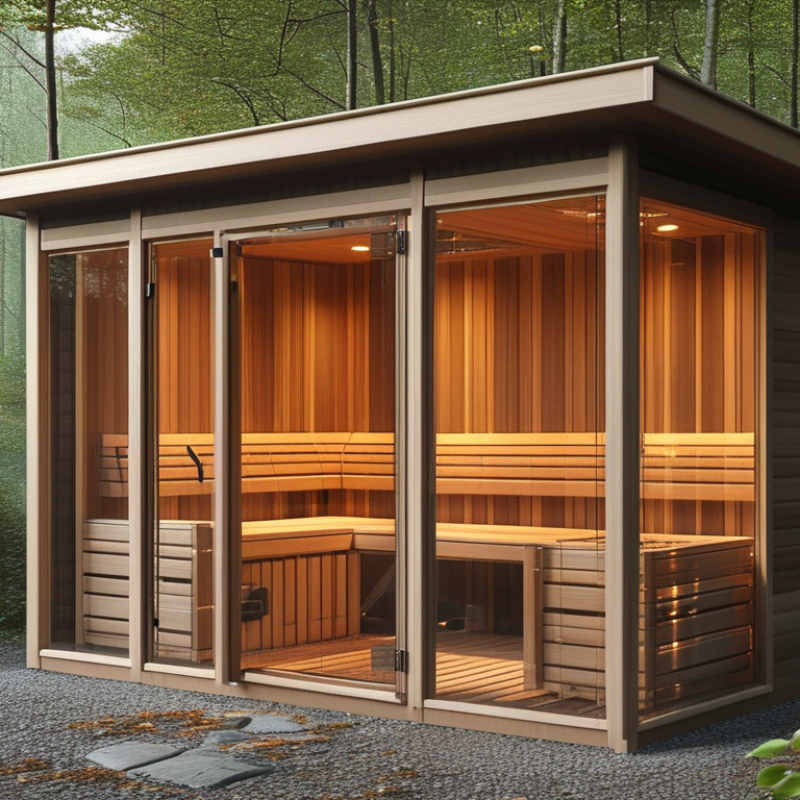
Choosing the best modular sauna starts with a clear purpose. Do you want quiet recovery after exercise, a private relaxation space, or regular family use? These goals affect the sauna’s size, seating layout, heat range, ventilation, and control system. A two-person sauna may suit evening relaxation, while larger groups need wider benches and stronger airflow.
Measure the proposed space carefully. Record ceiling height, wall width, door clearance, and the distance to electrical connections. Leave room for installation and maintenance, not just the sauna shell. A corner beside a bathroom may seem convenient, but moisture and drainage can create problems. Check the floor’s strength and keep combustible materials away from heated surfaces. Local electrical and building requirements should guide every installation decision.
Think about the actual users. Taller people need adequate bench length and headroom. Older users may prefer lower steps and stable handholds. Children require close supervision and carefully controlled temperatures. I once focused too much on exterior appearance and underestimated door clearance. That mistake made installation harder than expected. A modular design can simplify construction, but it cannot correct poor planning. Choose durable, easy-to-clean interior materials, and ask the installer how airflow, maintenance access, and emergency shutoff features are handled. Real comfort depends on these details, not photographs.
Define your sauna goals, available space, and intended users before choosing a modular sauna size.
The chart uses representative rectangular interior dimensions at a 2.1 m ceiling height. Larger user capacity requires more floor area and interior volume, so measure the available space carefully and allow additional room for access, ventilation, and equipment.
Choosing the best modular sauna starts with matching its structure to your space, routine, and installation limits. In my experience, flat-pack indoor cabins suit spare rooms, while outdoor units need weather-resistant framing and drainage. Pod-shaped models heat efficiently, but curved walls can reduce bench flexibility. Panel systems are easier to move and repair. They may look less seamless. That matters in a narrow basement.
Materials change comfort and maintenance. Spruce feels light and affordable, while cedar offers moisture resistance and a stronger aroma. Hemlock has a smooth appearance and usually less scent. Wood should be kiln-dried, untreated, and properly ventilated. Do not assume thicker walls always perform better. Insulation quality, door seals, and assembly accuracy often matter more. I have seen a well-sealed thin panel outperform a poorly fitted heavy one.
Heating systems deserve a practical comparison. Electric heaters provide precise controls and simple operation when suitable wiring is available. Infrared panels warm the body directly and often need less preheating. Their experience differs from traditional hot-air saunas. Wood-burning heaters create strong radiant warmth, yet they require approved ventilation, clearances, and careful operation. Consult a qualified installer and follow local building rules. A ceiling sensor may read much higher than bench level. Test both locations. Your first choice may need adjustment.
Use this comparison to match the sauna’s structure, materials, heating method, installation requirements, and operating characteristics with your available space and preferred bathing experience.
| Comparison Dimension | Indoor Modular Sauna | Outdoor Cabin Sauna | Barrel Sauna | Infrared Sauna Cabin |
|---|---|---|---|---|
| Typical placement | Bathroom, basement, gym, spare room, or other dry indoor space | Garden, patio, terrace, or other suitable outdoor area | Level outdoor surface with adequate drainage and ventilation clearance | Indoor room with a nearby electrical outlet |
| Typical footprint | Approximately 1.2–4.0 m² for compact one- to four-person models | Approximately 3–12 m², depending on changing areas and seating capacity | Approximately 2–8 m²; the curved shell uses space efficiently | Approximately 1.0–3.5 m² for one- to four-person models |
| Best suited for | Convenient year-round use and projects with limited outdoor space | Traditional sauna sessions, larger groups, and a separate outdoor wellness area | Fast installation and a distinctive outdoor design with compact planning | Lower-temperature sessions, apartments, and users who prefer gentle radiant heat |
| Typical room temperature | About 70–100°C with a conventional sauna heater | About 70–100°C with a conventional sauna heater | About 70–100°C with a conventional sauna heater | About 40–60°C, depending on the emitter design and control settings |
| Heat-up time | Usually 30–60 minutes with an electric heater; depends on volume and insulation | Usually 45–90 minutes because outdoor temperature and construction affect warm-up | Often about 30–60 minutes; the small volume can warm relatively quickly | Often about 10–30 minutes; the body is warmed directly rather than heating the whole room |
| Ventilation requirement | Fresh-air inlet and exhaust path are required for safe, comfortable air exchange | Supply and exhaust ventilation should be planned around the heater and prevailing conditions | Ventilation openings are still necessary despite the compact cylindrical structure | Basic room ventilation is normally sufficient; no combustion-air system is required |
| Common interior material | Untreated softwood such as spruce, pine, aspen, or hemlock | Spruce or pine framing and cladding; aspen, alder, or hemlock are common bench materials | Usually spruce or pine boards with moisture-resistant detailing and exterior protection | Non-resinous wood panels such as hemlock, cedar, basswood, or similar sauna-grade timber |
| Material characteristics | Softwoods are lightweight and economical; low-resin, smooth-grain species are preferred near seating | Exterior wood needs weather protection, ventilation behind cladding, and regular inspection | Curved boards require accurate assembly and regular attention to joints, drainage, and weather exposure | Interior surfaces should remain smooth, low-resin, and comfortable against warm skin |
| Insulation priority | Moderate to high; insulation reduces heat loss and protects the surrounding room | High; roof, floor, walls, door seals, and vapor-control details strongly affect efficiency | Moderate; the compact volume helps, but wall thickness and door sealing remain important | Lower whole-room insulation demand, but the cabin should still be assembled without drafts |
| Recommended heater options | Electric or infrared; wood-burning only where building and ventilation rules allow | Electric or wood-burning; selection depends on utilities, clearances, and local regulations | Electric is simple; a wood-burning unit requires a compliant chimney and hearth | Infrared panels or emitters; conventional sauna heaters are generally not used |
| Electrical planning | Dedicated circuit sizing must match the heater’s rated output; larger heaters may require higher-voltage supply | Outdoor-rated wiring, grounding, disconnects, and protection against moisture are essential | Electrical installation must be protected from weather and routed according to local electrical codes | Many compact units use a standard household supply, but the manufacturer’s rated load must be checked |
| Wood-burning requirements | Usually difficult because of chimney routing, fire clearances, combustion air, and building regulations | Requires a listed heater, correctly sized chimney, non-combustible hearth, clearances, and safe ventilation | Requires the same safety controls as any wood-burning sauna, including chimney and fire-protection provisions | Not applicable; infrared systems do not burn fuel |
| Steam and water use | Electric sauna heaters with stones can support water ladling when approved by the heater instructions | Electric or wood-burning stone heaters can create traditional steam bursts when designed for that use | Stone heaters can provide steam, although the smaller room may respond quickly to water application | Produces little room humidity; water should not be poured on infrared emitters unless specifically permitted |
| Energy-use profile | Depends mainly on heater power, session length, insulation, and preheating frequency | Usually higher heat loss in cold or windy weather; insulation and weather sealing are especially important | Compact volume can reduce heating demand, but outdoor exposure still affects consumption | Generally lower total room-heating demand because the operating temperature is lower and radiant heat is directed at occupants |
| Installation complexity | Low to medium; requires a level base, clearances, ventilation, and qualified electrical work | Medium to high; foundation, weatherproofing, utilities, and possible permits may be needed | Medium; assembly is straightforward, but leveling, band tension, drainage, and heater clearances matter | Low; typically assembled indoors and connected to a suitable electrical supply |
| Maintenance focus | Drying after use, cleaning benches, checking ventilation, and inspecting electrical components | All indoor tasks plus exterior stain or coating maintenance, roof checks, and weather-seal inspection | Exterior coating, band and joint inspection, drainage, bench cleaning, and moisture control | Wiping surfaces, keeping emitters clear, checking controls, and maintaining dry, clean flooring |
| Main advantages | Convenient access, broad heater choice, and protection from outdoor weather | Authentic outdoor setting, flexible size, and compatibility with electric or wood-burning heat | Compact footprint, distinctive appearance, and relatively quick outdoor assembly | Lower operating temperature, simple installation, and no chimney or combustion system |
| Main limitations | Indoor moisture management, room access, electrical capacity, and limited ceiling height | Higher installation cost, weather exposure, foundation needs, and potentially more demanding maintenance | Less flexible interior layout and greater sensitivity to water drainage and wood movement | Does not provide the same high-temperature, stone-heater, or steam experience as a traditional sauna |
| Choose this option when… | You want a traditional sauna inside the home and have suitable ventilation and electrical capacity | You have outdoor space and want a dedicated sauna building with conventional or wood-fired heating | You prioritize compact outdoor installation and a rounded, space-efficient design | You prefer gentle radiant heat, a shorter warm-up, and a simple indoor installation |
Important: Temperature ranges, electrical requirements, clearances, ventilation details, and permitted heater types vary by model and local building, fire, and electrical regulations. Always verify the installation manual and use qualified professionals for electrical, chimney, and structural work.
How to Choose the Best Modular Sauna?
Size and layout should match your real routine, not an imagined lifestyle. Measure the room, doorway, stairway, and turning space before ordering. A two-person sauna may need less interior space, but benches still require comfortable legroom. Leave enough clearance around the heater and door. A cramped layout quickly becomes frustrating.
Installation depends on the site. Check whether the floor is level, moisture-resistant, and strong enough for the completed unit. Confirm electrical capacity with a qualified electrician. Ventilation also matters. Fresh air should enter near the heater, while stale air needs a clear exit path. Poor airflow can create uneven heat and lingering dampness. I have seen plans fail because the delivery route was ignored. The sauna fit the room, but not the hallway.
Tips: Create a simple floor plan with measurements. Mark the heater, benches, door swing, vents, and power connection. Ask the installer about ceiling height, wall protection, drainage, and maintenance access. Review local safety requirements before installation. Small details matter. Avoid choosing the largest model automatically; unused space increases cost and heating time. A practical layout may feel less impressive, yet it usually performs better.
Choosing the best modular sauna starts with energy efficiency, not appearance. The International Energy Agency reports that buildings use about 30% of global final energy. A well-insulated sauna therefore deserves careful inspection. Look for tight door seals, insulated wall panels, and a heater matched to the room’s volume. Check the heater’s rated power, warm-up time, and standby consumption. A timer or automatic shutoff can prevent accidental overnight operation.
Safety features need practical attention. IEC 60335-2-53 covers safety requirements for sauna heating appliances, including temperature control and protective measures. Confirm that the unit follows applicable local electrical standards. Use heat-resistant interior materials, guarded heating elements, and a reliable temperature sensor. The National Fire Protection Association reported that heating equipment caused about 13% of U.S. home structure fires from 2016 to 2020. That figure is a useful warning, even for a small prefabricated cabin. Installation errors still happen.
Tips: Measure the circuit before purchase. Keep towels away from the heater. Test the emergency shutoff. Ask for service instructions.
Maintenance should be simple enough for real life. Wipe benches after sessions, dry the floor, and inspect stones, cables, seals, and ventilation monthly. Replace cracked stones or damaged insulation promptly. Some advice feels obvious, but users often skip ventilation checks. I have found that a maintenance log exposes small problems early, especially unusual smells, slow heating, or unstable temperature readings. Choose replaceable components and clear warranty terms, rather than a polished design with unclear servicing.
Quality starts with what you can inspect, not what the brochure promises. Check kiln-dried timber, tight panel joints, corrosion-resistant fasteners, and stable glass doors. The heater should list certified electrical safety testing and clear installation requirements. In my experience, poor ventilation causes more frustration than imperfect wood grain. The Global Wellness Institute reported that the wellness real estate market reached $438 billion in 2023. That growth raises expectations, but it does not guarantee better construction. Ask for moisture resistance data, insulation thickness, and replacement-part availability. A beautiful cabin can still be a costly mistake.
Warranty terms deserve careful reading. Look for separate coverage periods for the structure, heater, controls, and glass. Confirm whether labor, shipping, and on-site service are included. A five-year warranty may sound strong. It may cover only selected components. The 2024 U.S. Consumer Product Safety Commission data showed that home products can create safety risks when installation instructions are misunderstood. Keep every manual, invoice, and service record. These details protect your claim. They also expose weak after-sales support.
Tips: Calculate total cost before ordering. Include delivery, foundation work, electrical upgrades, ventilation, assembly, and future heater replacement. The U.S. Energy Information Administration reported an average residential electricity price of about 16.5 cents per kilowatt-hour in 2024. A 6-kilowatt heater running for one hour costs roughly $1.00, before warm-up losses. Real use varies. Ask for a written estimate. Then challenge unclear fees. Custom benches, lighting, and controls improve comfort, but they can quietly inflate the final price. 马会
Decide whether it supports exercise recovery, private relaxation, or family use. A two-person cabin may suit quiet evenings. Larger groups need wider benches and stronger airflow. Your routine matters more than attractive photographs.
Record ceiling height, wall width, door clearance, and nearby electrical access. Leave space for assembly and maintenance. Measure twice. A narrow doorway can stop a large cabin before heating begins.
It may be convenient, but moisture and drainage can create problems. Check floor strength, ventilation, and separation from combustible materials. The location may look ideal. It may not be practical.
Flat-pack cabins suit spare rooms and are usually easier to move. Outdoor units need weather-resistant framing and effective drainage. Pod-shaped cabins can heat efficiently, but curved walls may reduce bench flexibility. Panel systems can simplify repairs.
Spruce feels light and affordable, while cedar resists moisture and has a stronger aroma. Hemlock offers a smooth appearance and usually less scent. Choose kiln-dried, untreated wood with good ventilation. Easy cleaning is often overlooked.
No. Insulation quality, door seals, and accurate assembly can matter more than thickness. A thin, well-sealed panel may outperform a heavy, poorly fitted one. That surprised me too.
Electric heaters offer precise controls when suitable wiring is available. Infrared panels warm the body directly and often need less preheating. Wood-burning systems provide strong radiant warmth but require approved ventilation and clearances. Your first choice may need adjustment.
Taller users need enough bench length and headroom. Older users may need lower steps and stable handholds. Children require close supervision and controlled temperatures. Check emergency shutoff access and test temperatures at bench level. Ceiling readings can be much higher.
Choosing the best Modular Sauna starts with clearly defining your goals, available space, budget, and intended users. Consider whether you want a relaxing home retreat, a wellness-focused space, or a convenient option for regular family use. Compare different sauna types, construction materials, and heating systems to find the right balance of comfort, durability, heat performance, and operating convenience.
Before purchasing, evaluate the sauna’s dimensions, interior layout, installation process, ventilation, electrical requirements, and site conditions. Energy efficiency, temperature controls, protective features, and ease of cleaning should also be carefully reviewed to support safe and dependable use. Finally, assess construction quality, warranty coverage, customization options, delivery requirements, and the total cost of ownership rather than focusing only on the initial price. A thoughtful comparison will help you select a Modular Sauna that fits your lifestyle, space, and long-term wellness needs.