Discover industry updates, modern architecture guides, and technical insights on prefabricated modular homes.
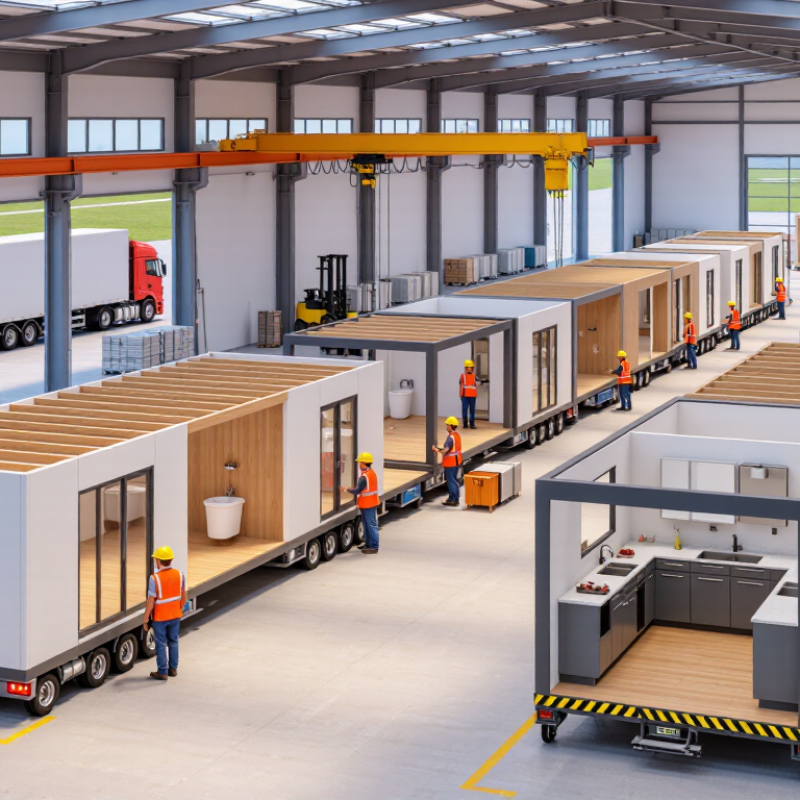
The 2026 global housing market is becoming more demanding, not simply larger. Buyers now seek Offsite Built Homes that combine predictable costs, shorter schedules, reliable quality, and responsible material choices. In a controlled factory, wall panels, roof systems, kitchens, and bathroom pods can be produced with repeatable measurements. A completed module may then travel by truck or ship, ready for efficient assembly on site.
Mark Farmer, a respected construction strategist and author of Modernise or Die, offered a blunt warning: “Modernise or die.” His words remain relevant for international homebuyers comparing suppliers across unfamiliar markets. The strongest manufacturers show more than attractive renderings. They provide factory photographs, inspection records, structural calculations, installation manuals, and evidence of completed projects. They also explain how their systems respond to local wind, snow, seismic, fire, energy, and accessibility requirements.
Details matter.
A serious supplier should clarify shipping dimensions, crane access, foundation tolerances, warranty coverage, spare parts, and after-sales support. Certifications deserve careful checking, especially when documents come from different jurisdictions. Experience with export packaging can prevent damaged corners, moisture exposure, and delayed installation. Still, no supplier is flawless, and glossy brochures cannot replace independent verification. Buyers may discover that the cheapest quotation excludes foundations, utility connections, permits, or interior finishes. That uncomfortable gap is easy to miss.
This guide examines leading Offsite Built Homes suppliers for global buyers in 2026. It considers manufacturing capability, design flexibility, delivery experience, quality control, sustainability, and communication. The ranking is not absolute. Project location, climate, budget, and local approvals can change the best choice.
2026 Top Offsite Built Homes Suppliers for Global Buyers
Market Definition: McKinsey’s $130B Modular Opportunity by 2030
Offsite-built homes are factory-produced residential units assembled away from the final site. They may include volumetric modules, panelized walls, bathroom pods, and hybrid systems. McKinsey estimates that modular construction could reach approximately $130 billion globally by 2030. The opportunity reflects labor shortages, housing demand, and pressure to reduce construction waste.
The figure needs careful interpretation. Market reports often combine permanent modular housing, temporary buildings, and prefabricated components. McKinsey’s construction research highlights faster project delivery and improved production control as major benefits. Industry surveys also show growing buyer interest in factory-based quality assurance. Yet transport distance, local codes, foundation work, and crane access can change the final cost. Factory precision is helpful. It is not magic.
Tips: Global buyers should request third-party test records, fire ratings, energy data, and factory quality procedures. Compare landed cost, not only unit price. Ask suppliers to explain tolerances, replacement parts, installation training, and warranty responsibility. Local certification matters more than attractive renderings. A pilot shipment can expose hidden delays before a large order. Procurement teams should also check whether the supplier’s design supports local weather, seismic, and ventilation requirements. Mistakes still happen, especially when drawings cross languages and time zones.
For global buyers, offsite construction is shifting from a niche method into a measurable supply strategy. McKinsey’s 2019 report, “Modular Construction: From Projects to Products,” estimates modular delivery can be 20–50% faster than conventional building. That difference matters when financing, labor, and weather create schedule pressure.
Factory production moves repeated tasks under controlled conditions. Wall panels arrive numbered, wrapped, and ready for installation. Crews may connect modules with cranes while site teams complete foundations and utilities. McKinsey’s “Reinventing Construction” report also found construction productivity grew only about 1% annually over two decades. Offsite methods address part of that weakness through repeatable workflows, digital coordination, and earlier quality checks.
The numbers need careful interpretation. Faster delivery is not automatic. Design changes, port delays, local approvals, and poor packaging can erase factory gains. Buyers should request production records, inspection procedures, tolerance data, and installation references. Check the details.
A credible supplier should explain its building system in plain language. It should also provide climate-specific specifications for insulation, moisture control, fire performance, and wind resistance. These checks reflect practical procurement experience, not marketing optimism. The 20–50% range is useful, but each project needs its own schedule model, transport plan, and risk allowance.
Industry research reports that modular and offsite construction can reduce project delivery time by approximately 20% to 50% compared with conventional site-built methods. The chart shows the reported lower and upper bounds of this schedule reduction range; actual results depend on design standardization, factory capacity, logistics, permitting, and site preparation.
Source: McKinsey industry research on modular construction; values represent the reported schedule-reduction range.
For global buyers comparing 2026 offsite built home suppliers, ISO 9001 is a practical starting point. It shows that documented quality processes guide purchasing, production, inspections, and corrective actions. Ask for the current certificate, certification scope, and audited manufacturing address. Confirm that the certificate covers structural components, not only office administration.
EN 1090 matters when suppliers fabricate load-bearing steel or aluminium parts. It requires controlled production, qualified welding procedures, traceable materials, and documented factory production control. Buyers should review the execution class, welding qualifications, inspection records, and material certificates. Check whether component markings match the packing list and approved drawings. Small details matter.
Still, paperwork is not proof. A certificate can hide weak daily practice. During supplier evaluation, request sample inspection reports, weld visual checks, dimensional records, and photographs from recent production. Compare heat numbers on steel certificates with actual component labels. Ask how nonconforming parts are isolated and corrected. Clear answers usually reveal process maturity.
Global projects also need local engineering review. Wind loads, snow loads, fire rules, foundations, and transport limits vary by location. EN 1090 compliance does not automatically approve an entire home for every market. A reliable supplier should explain these boundaries without vague promises. Buyers should record every revision, approval, and inspection decision. Mistakes still happen, especially when drawings change late. The important question is whether the quality system detects them early.
2026 Top Offsite Built Homes Suppliers for Global Buyers
UN DESA projects that 68% of the world’s population will live in urban areas by 2050. This shift will increase pressure on housing, infrastructure, and construction schedules. Offsite-built homes can support faster delivery when urban land remains limited. Factory production also improves repeatability, material tracking, and quality inspection.
Global buyers should examine more than catalog prices. Ask suppliers for structural specifications, factory audit records, fire-safety documentation, and verified installation procedures. A serious supplier explains how modules handle sea transport, local weather, and uneven site access. Details matter. A narrow city road can delay a complete project.
Climate adaptation must guide sourcing decisions. Homes for humid regions need moisture control and corrosion-resistant components. Cold markets require tested insulation and airtight connections. Suppliers should also clarify repair access, spare parts, warranties, and training for local contractors. These questions reveal practical experience.
The 68% projection is a planning signal, not a guaranteed market outcome. Urban growth differs sharply between regions. Some projects may need compact apartments, while others require low-rise homes near expanding transport routes. Buyers should compare full lifecycle costs, not only factory quotations. Offsite construction can reduce waste, yet transport emissions and foundation work still need careful review. Some assumptions will fail. A flexible specification is safer than an impressive promise.
2026 Top Offsite Built Homes Suppliers for Global Buyers
A practical buyer scorecard should compare more than the quoted factory price. Record unit cost, packaging, inland transport, ocean freight, duties, installation, and local finishing. A low bid can become expensive after cranes, storage, and site delays. Request a fixed quotation period and clear assumptions. Keep currencies consistent.
Carbon data needs equal discipline. Ask whether figures cover materials, factory energy, transport, and installation. Compare kilograms of CO2e per square meter, not attractive percentage claims. Verify calculation methods through product declarations or independent technical reviews. Capacity also matters. Record monthly output, current backlog, shift patterns, and production bottlenecks. One factory may promise 500 homes annually but lack enough trained installation crews.
Tips: Ask for three recent delivery records, factory audit dates, and references from similar climates. Separate promised lead time from realistic lead time. Include design approval, sampling, permitting, shipping, customs, foundation work, and commissioning. A supplier quoting eight weeks may mean eight weeks after final drawings, not after payment.
Leave space for uncertainty. Early carbon estimates often change when finishes, insulation, or transport routes change. Lead-time spreadsheets can look precise while hiding seasonal port congestion. Score each supplier using evidence, not confidence. Recheck capacity before signing, especially when several projects share the same production window. Our experience shows that a transparent, qualified estimate is often more useful than a perfect-looking number.
Anonymous supplier profiles benchmarked for international procurement and early-stage project comparison.
| Supplier Profile | Primary Delivery Region | Typical System | Indicative Factory-Gate Cost USD/m² |
Estimated Delivered Cost USD/m² |
Embodied Carbon kgCO₂e/m² |
Annual Rated Capacity Homes |
Current Lead Time Weeks |
Export Readiness /100 |
Cost /25 |
Carbon /25 |
Capacity /25 |
Lead Time /25 |
Overall /100 |
|---|---|---|---|---|---|---|---|---|---|---|---|---|---|
| Profile AHigh-volume panel producer | Western Europe | Timber-frame insulated panels | $650–850 | $1,050–1,450 | 180–260 | 1,200–1,800 | 18–24 | 88 | 20 | 23 | 23 | 20 | 86 |
| Profile BPrecision volumetric manufacturer | Northern Europe | Factory-finished volumetric modules | $1,050–1,450 | $1,650–2,250 | 240–360 | 500–800 | 24–32 | 91 | 17 | 21 | 19 | 19 | 76 |
| Profile CLow-carbon engineered-wood specialist | Central Europe | Cross-laminated timber modules | $1,150–1,600 | $1,800–2,500 | 110–190 | 300–550 | 26–36 | 84 | 16 | 25 | 17 | 17 | 75 |
| Profile DCost-focused steel-frame exporter | Eastern Europe | Light-gauge steel panel system | $600–850 | $950–1,350 | 420–650 | 900–1,400 | 20–28 | 79 | 22 | 13 | 22 | 20 | 77 |
| Profile EHybrid panel-and-module producer | North America | Timber panels with service modules | $850–1,200 | $1,400–1,950 | 190–310 | 700–1,100 | 22–30 | 86 | 19 | 22 | 20 | 19 | 80 |
| Profile FRegional modular housing producer | East Asia | Steel volumetric modules | $550–800 | $1,000–1,500 | 450–700 | 1,000–1,600 | 28–40 | 72 | 23 | 12 | 23 | 15 | 73 |
| Profile GSmall-batch high-performance builder | Oceania | Timber panel kit with local assembly | $750–1,100 | $1,350–1,950 | 160–250 | 180–350 | 30–42 | 81 | 18 | 23 | 14 | 14 | 69 |
| Profile HConcrete-panel mass producer | Southern Europe | Precast concrete sandwich panels | $700–1,000 | $1,150–1,650 | 520–850 | 800–1,300 | 24–34 | 75 | 20 | 10 | 22 | 18 | 70 |
Urban populations may reach 68% of the global total by 2050. Limited land could increase housing pressure. Factory production may shorten delivery schedules.
Request structural specifications, factory audit records, fire-safety documents, and verified installation procedures. Ask for evidence, not confident promises.
Include the home, packaging, inland transport, ocean freight, duties, installation, cranes, storage, foundations, and local finishing. A low quotation may become expensive later.
Ask how modules handle sea transport, local weather, narrow roads, and uneven access. One narrow city road can delay a complete project.
Humid regions need moisture control and corrosion-resistant components. Cold regions need tested insulation and airtight connections. Local weather changes the design.
Record monthly output, current backlog, shift patterns, bottlenecks, and available installation crews. A stated annual capacity may not reflect current reality.
Include design approval, sampling, permits, production, shipping, customs, foundations, installation, and commissioning. Eight weeks may begin after final drawings.
Check whether calculations include materials, factory energy, transport, and installation. Compare kilograms of CO2e per square meter. Attractive percentages can mislead.
Request three recent delivery records, factory audit dates, and references from similar climates. Similar projects reveal practical experience better than catalog claims.
Carbon estimates can change with finishes, insulation, and transport routes. Port congestion can disrupt neat schedules. Our assumptions may still fail.
Offsite Built Homes are becoming a strategic solution for global buyers seeking faster, more predictable, and sustainable construction. With the modular construction market projected to reach approximately $130 billion by 2030, factory-based production can shorten delivery timelines by 20–50% compared with many traditional building methods. Standardized manufacturing, controlled quality processes, and efficient material use help suppliers respond to rising housing demand while reducing waste and improving project consistency.
As urbanization is expected to approach 68% worldwide by 2050, international buyers need reliable supplier evaluation criteria. A practical 2026 scorecard should compare total cost, carbon performance, production capacity, and confirmed lead times. Buyers should also verify quality-management systems such as ISO 9001 and structural fabrication compliance such as EN 1090, where applicable. By reviewing certification, engineering capability, logistics readiness, customization options, and after-sales support, purchasers can identify dependable offsite housing partners for residential, commercial, and community development projects.