Discover industry updates, modern architecture guides, and technical insights on prefabricated modular homes.
Eco Modular Housing is moving from a niche building option toward a serious response to rising costs, material waste, and housing shortages. Yet the market is uneven. Some manufacturers deliver efficient, durable homes, while others rely on attractive sustainability claims.
This guide examines the Top 10 Eco Modular Housing Manufacturers Worldwide through practical criteria. These include material transparency, energy performance, factory quality control, transport planning, design flexibility, and after-sales support. We also consider real project experience, regional climate needs, and the difference between recyclable materials and genuinely lower-impact construction.
Building researcher Stewart Brand offered a useful warning: “All buildings are predictions. All predictions are wrong.” His point matters here. A factory-built home may reduce site waste, but transport distances, foundations, replacement parts, and long-term maintenance still shape its environmental footprint.
Details matter.
A well-designed module should arrive with precise joints, protected insulation, and tested connections. It should also feel comfortable in daily life, not merely efficient on paper. Some manufacturers provide impressive energy data but limited evidence from occupied homes. Others offer beautiful designs that may be difficult to adapt, repair, or relocate.
This ranking is therefore not a claim of absolute superiority. It is a practical comparison based on publicly available information and industry indicators. Standards vary between countries, and product availability can change quickly. Readers should verify certifications, local building approvals, warranty terms, and lifecycle costs before making decisions. Even the strongest Eco Modular Housing solution may need improvement. That is part of the conversation.
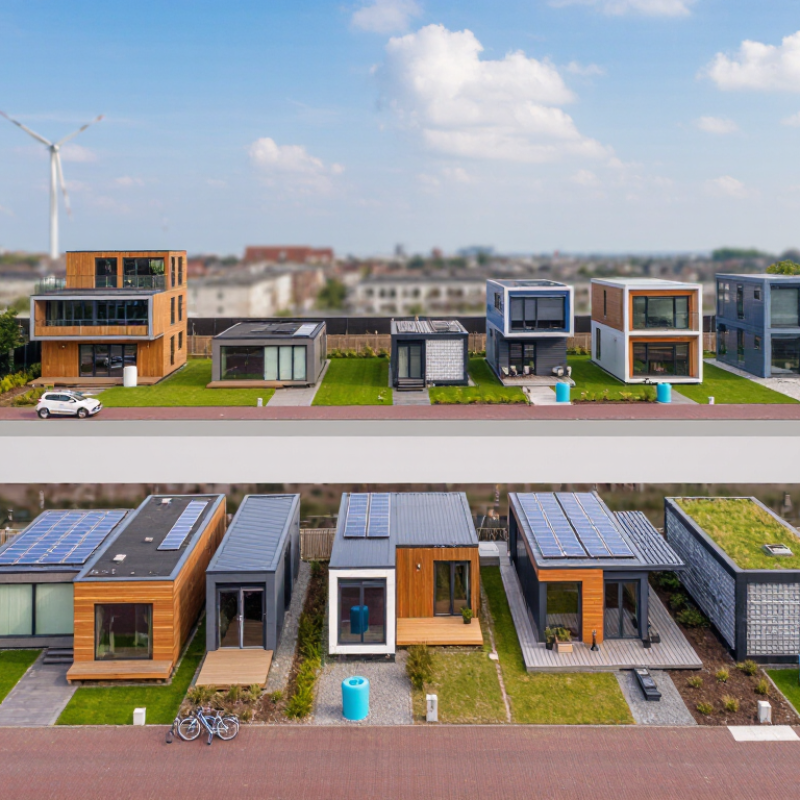
Eco modular housing combines factory-built modules with measurable environmental performance. A module is not automatically sustainable. Its value depends on materials, energy use, transport, durability, and end-of-life recovery.
The core principle is lifecycle thinking. Designers should reduce emissions from extraction, manufacturing, construction, operation, and demolition. UNEP’s 2023 Global Status Report for Buildings and Construction found that buildings consumed 34% of global energy and produced 37% of energy and process-related emissions in 2022. This makes insulation, airtight construction, shading, and efficient heating essential. Solar panels help, but they cannot repair a poorly designed envelope.
Factory production can improve precision and reduce weather-related damage. McKinsey’s 2019 report, Modular construction: From projects to products, estimated that modular methods could cut project schedules by 20% to 50%. Waste benefits are possible, too, although results vary by factory and project. Recycled steel, certified timber, low-carbon concrete, water-saving fixtures, and non-toxic finishes support healthier interiors. Modules should also be designed for disassembly, repair, and relocation. That detail is often missed.
Real performance needs evidence. An environmental product declaration, energy model, and post-occupancy monitoring are stronger than attractive claims. Transport distance can weaken the environmental case. A compact module shipped hundreds of miles is not automatically green. Water use, local climate, grid intensity, and maintenance must be checked together. Eco housing remains a target, not a label.
Eco modular housing combines factory-based construction with low-impact materials, energy efficiency, resource conservation, durability, and design for disassembly. The chart presents midpoint values from publicly reported industry benchmark ranges; it does not rank or compare individual companies.
How to read the chart: The percentages represent indicative reductions or improvement targets commonly associated with well-designed modular construction compared with conventional site-built projects. Actual results depend on climate, materials, building codes, transportation distance, and operational performance.
Reference basis: U.S. Environmental Protection Agency construction and demolition waste guidance; U.S. Department of Energy building-efficiency guidance; World Green Building Council circularity principles; UNEP Global Status Report for Buildings and Construction.
Comparing eco modular manufacturers requires more than reviewing attractive renders. Examine factory experience, completed projects, and evidence from occupied homes. Ask how long modules remain protected from rain, dust, and temperature changes during production.
Material transparency is a practical test of expertise. Reliable manufacturers can provide insulation values, recycled content, timber sources, and environmental product information. Check wall samples for airtight membranes, thermal bridges, acoustic layers, and moisture control. A thermal camera inspection can reveal weak junctions that brochures rarely show.
Certification matters, but local compliance matters more. Confirm structural calculations, fire performance, electrical systems, and accessibility requirements for the project location. Transport planning deserves equal attention. Measure road access, turning space, crane reach, and module dimensions before signing a contract. Small errors can create expensive delays.
Compare factory quality controls, not just promised delivery dates. Look for documented inspections, moisture readings, digital records, and independent testing. Warranty terms should cover structure, water ingress, finishes, and replacement procedures. Maintenance access is often overlooked; tightly sealed equipment panels may complicate future repairs.
No manufacturer is flawless. A serious comparison should record limitations, rejected materials, and lessons from past projects. Speak with recent clients, visit a completed home, and inspect joints after one winter. The cheapest quotation may exclude foundations, transport, permits, or site drainage. Those omissions change the real environmental and financial cost.
Top 10 Eco Modular Housing Manufacturers Worldwide
A credible top-ten list should measure more than appearance or factory size. Leading eco modular housing manufacturers combine certified timber, recycled steel, low-VOC finishes, and airtight construction. Their designs also support disassembly, repair, and future reuse. This matters because UNEP’s 2023 Global Status Report states that buildings and construction consumed 34% of global energy and produced 37% of energy and process-related emissions in 2022.
Factory production can improve consistency. McKinsey’s 2019 report, Modular construction: From projects to products, found that modular methods may reduce construction schedules by 20–50% and costs by up to 20%. However, these figures are not guaranteed. Long-distance shipping, poor site planning, and inefficient foundations can weaken environmental gains. A manufacturer deserves recognition only when it shares lifecycle data, waste records, energy performance results, and credible environmental product declarations. No ranking is perfect. Real projects often reveal uncomfortable gaps.
Tips: Ask for third-party testing, not marketing claims. Check insulation values, airtightness results, moisture controls, and maintenance access. Compare transport distance with local suppliers. Request evidence of responsible material sourcing and factory waste recovery. Also, examine the home after five years, not only on handover day. A beautiful module can still perform poorly if residents cannot afford its heating, cooling, or repairs.
| Rank | Anonymous Manufacturer Profile | Primary Market | Modular Construction System | Typical Building Applications | Key Eco-Design Characteristics | Common Sustainability Standards | Typical Factory Advantages | Best-Fit Project Type |
|---|---|---|---|---|---|---|---|---|
| 1 | Manufacturer A | North America | Volumetric steel and hybrid modular construction | Multi-family housing, workforce housing, hotels and student accommodation | High material efficiency Low site waste Energy-efficient envelopes | Energy Star, LEED and local building-code compliance options | Repeatable production, controlled indoor assembly and reduced weather delays | Large-scale urban housing developments |
| 2 | Manufacturer B | Northern Europe | Factory-built timber volumetric modules | Detached homes, apartments, senior living and social housing | Engineered timber Low-carbon structure High insulation levels | CE marking, national energy-performance regulations and FSC or PEFC timber options | Precision cutting, standardized modules and efficient logistics planning | Low-energy residential communities |
| 3 | Manufacturer C | Western Europe | Panelized timber-frame and hybrid modular systems | Single-family homes, townhouses, apartments and public housing | Bio-based materials Airtight envelopes Design for disassembly | Passive House, BREEAM and national low-energy building standards | Flexible floor plans, accurate factory tolerances and shortened on-site programs | Net-zero-ready and passive residential projects |
| 4 | Manufacturer D | Central Europe | Insulated concrete and precast modular construction | Apartment blocks, student housing, healthcare facilities and schools | Long service life Thermal mass Durable components | EU construction-product requirements, BREEAM and regional energy codes | High repeatability, robust structural performance and reduced wet trades on site | High-density housing and institutional accommodation |
| 5 | Manufacturer E | East Asia | Steel volumetric modular construction with integrated services | Compact apartments, hotels, emergency housing and worker accommodation | High-strength steel Efficient space planning Factory commissioning | ISO 9001 manufacturing systems and applicable national green-building standards | Fast line production, standardized connections and reliable quality control | Rapid-delivery housing in dense or space-constrained locations |
| 6 | Manufacturer F | Australia and New Zealand | Light-gauge steel and panelized modular construction | Detached housing, remote accommodation, healthcare and education buildings | Recyclable steel Transport-efficient panels Climate-adapted design | Green Star, NatHERS and local energy-efficiency requirements | Reduced site labor, predictable assembly and suitability for remote projects | Regional, coastal and remote-area housing |
| 7 | Manufacturer G | Scandinavia | Precision-engineered timber modules | Family homes, holiday residences, apartments and affordable housing | Renewable timber Low operational energy Material traceability | Nordic Swan-related criteria, FSC or PEFC sourcing and national energy codes | High automation, low cutting waste and year-round indoor production | Cold-climate housing and sustainable suburban developments |
| 8 | Manufacturer H | United Kingdom and Ireland | Timber-frame and volumetric modular systems | Affordable housing, build-to-rent apartments, schools and care homes | Fabric-first design Low construction waste Renewable-energy integration | UK Building Regulations, Passivhaus and BREEAM project targets | Improved program certainty, repeatable quality and reduced neighborhood disruption | Public-sector and multi-unit residential programs |
| 9 | Manufacturer I | North America | Panelized wood-frame and hybrid modular construction | Single-family homes, accessory dwelling units and small multi-family buildings | Efficient insulation Solar-ready roofs Reduced construction waste | ENERGY STAR, LEED, Zero Energy Ready Home and local residential codes | Flexible customization, shorter on-site construction and repeatable detailing | Custom eco-homes and infill housing projects |
| 10 | Manufacturer J | Southern Europe | Hybrid modular systems using steel, timber and prefabricated panels | Tourist residences, compact homes, student housing and disaster-relief units | Passive cooling Water-saving fixtures Adaptable layouts | EU energy-performance requirements and local green-building certifications | Rapid deployment, reduced on-site resource use and adaptable module configurations | Warm-climate housing and temporary-to-permanent accommodation |
Note: The profiles are anonymized and summarize commonly documented capabilities, construction systems and sustainability standards used by leading eco-modular housing manufacturers worldwide. Exact certifications, product specifications and performance results vary by project, location and applicable building regulations.
Top 10 Eco Modular Housing Manufacturers Worldwide: Sustainable Technologies and Materials Used in Modular Homes
Modular housing is reducing construction waste through factory-controlled production. Precise cutting leaves fewer offcuts than conventional site building. The 2024 Global Status Report for Buildings and Construction reports that buildings consume about 32% of global energy and produce roughly 34% of energy-related carbon emissions. This pressure makes efficient modular design increasingly important.
Leading manufacturers now combine high-performance insulation with airtight envelopes and heat-recovery ventilation. Mineral wool, recycled cellulose, and wood-fibre boards can reduce heat loss without relying on excessive mechanical systems. Factory-built wall cassettes also support continuous insulation around windows and joints. Small gaps matter. They can quietly undermine excellent specifications.
Low-carbon concrete, recycled steel, engineered timber, and responsibly sourced wood are gaining attention. The International Energy Agency identifies material efficiency and low-carbon construction as important pathways for reducing building emissions. Some projects use photovoltaic roofing, air-source heat pumps, greywater systems, and smart energy controls. These technologies work best when designed together, not added at the end.
Life-cycle assessment remains essential. A recycled material may still carry high transport or processing impacts. The 2023 UNEP Global Status Report highlights the need to address both operational and embodied carbon. Manufacturers should publish product declarations, durability data, and realistic energy performance. Certification helps, but it cannot replace careful site assessment. A well-insulated module in the wrong climate can still perform poorly. Sustainability is measurable, yet never perfectly simple.
For a Top 10 eco modular housing list, buyers should examine measurable performance, not attractive factory images. The IEA reports that buildings consume about 30% of global final energy and produce roughly 26% of energy-related emissions. Modular construction can reduce site waste and improve quality control, but results vary by material, transport distance, and factory discipline. “Prefabricated” does not automatically mean sustainable.
Market demand is shifting toward energy efficiency, adaptable layouts, and lower embodied carbon. UNEP’s 2024 Global Status Report states that buildings and construction remain responsible for about 32% of global energy use and 34% of carbon dioxide emissions. Ask manufacturers for product carbon data, energy-model assumptions, and third-party certifications. Check insulation continuity around windows, roofs, and floor joints. Small thermal bridges matter. Buyers should also verify moisture testing, fire compliance, local planning approval, repair access, and warranty coverage. A cheap unit may become expensive after transport, foundation work, or upgrades.
Tips: Compare full-life costs over 30 years, not only the factory quote. Request an Environmental Product Declaration where available. Visit a completed project, preferably after one winter. Review the ventilation system in person. Data quality is still uneven, and some comparisons look overly optimistic. I would treat unsupported carbon claims cautiously. A careful buyer should also ask whether panels, finishes, and mechanical systems can be replaced without dismantling the entire home.
It combines factory-built sections with measurable environmental performance. Materials, energy use, transport, durability, and reuse all matter. A factory label is not enough.
Not always. Factory production can improve precision and reduce weather damage. It may also reduce site waste. However, long-distance transport or inefficient foundations can weaken these benefits.
Recycled steel, responsibly sourced timber, low-carbon concrete, and low-VOC finishes are useful options. Water-saving fixtures can reduce daily consumption. Material claims still need evidence.
Insulation is critical for reducing heating and cooling demand. Check insulation continuity around windows, roofs, floors, and module joints. Small gaps matter.
No. Solar panels cannot fix weak insulation or air leakage. Airtight construction, shading, efficient heating, and proper ventilation come first. The roof is only one part.
Ask for an Environmental Product Declaration where available. Request energy models, airtightness results, moisture tests, waste records, and third-party testing. Marketing images prove very little.
Compare full-life costs over thirty years, not only the factory quote. Include transport, foundations, installation, heating, cooling, maintenance, and future repairs. A low price can become expensive.
Good designs allow disassembly, repair, relocation, and component replacement. Ask whether finishes, panels, windows, and mechanical systems can be changed separately. This detail is often forgotten.
Visit a completed home after at least one winter. Check ventilation, moisture control, heating bills, repair access, and indoor comfort. Handover day can look perfect.
No ranking is completely reliable. Factories should be judged by lifecycle data, energy results, sourcing records, and waste recovery. I would question unsupported carbon claims.
Eco Modular Housing combines the efficiency of off-site construction with environmentally responsible design principles. It emphasizes reduced material waste, energy efficiency, durable construction, recyclable or renewable materials, and minimal site disruption. When comparing global manufacturers, buyers should consider build quality, energy performance, customization options, production standards, transportation requirements, installation services, warranties, and long-term operating costs. A reliable manufacturer should also demonstrate transparent sustainability practices and the ability to meet local building regulations.
The leading manufacturers in this field represent different approaches to modular living, from compact residential units to larger, highly customizable homes. Common technologies include high-performance insulation, airtight building envelopes, solar-ready systems, heat pumps, water-saving fixtures, recycled materials, and smart energy controls. Market demand is growing as buyers seek faster construction, predictable pricing, flexible layouts, and lower environmental impact. Before making a decision, purchasers should evaluate climate suitability, maintenance needs, delivery logistics, financing, and the manufacturer’s experience with comparable projects.