Featured Offsite Prefabricated Backyard Pods & Modular Units
Engineered by leading Chinese original equipment manufacturers (OEM). Certified for structural durability, climate resilience, and immediate installation.
1. Executive Summary & Sourcing Landscape
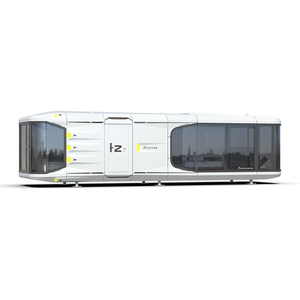
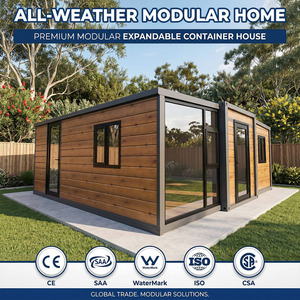
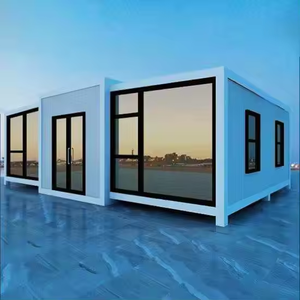
The global demand for high-performance offsite construction solutions has reached an unprecedented inflection point. In an era marked by escalating traditional construction costs, severe skilled labor shortages, and stringent municipal environmental guidelines, global real estate developers, hospitality operators, and residential homeowners are rapidly shifting toward offsite modular manufacturing. Among these solutions, prefabricated backyard pods—ranging from compact garden offices, accessory dwelling units (ADUs), and backyard retreats to modular saunas and expandable container units—represent the fastest-growing architectural segment.
China has firmly established itself as the undisputed global epicenter for prefabricated building manufacturing, housing over 70% of the world's offsite fabrication capacity. Backed by end-to-end supply chain integration, advanced robotic welding, laser-cutting steel fabrication, and eco-certified material synthesis, premier Chinese manufacturers deliver custom architectural pods at up to 40% lower cost and half the total delivery timeline of domestic European or North American builders. This whitepaper provides commercial procurement managers, importers, and B2B buyers with an authoritative analysis of manufacturing standards, future procurement trajectories, and technical verification frameworks for importing prefabricated backyard pods from China.
Key Technological Benchmarks of Top-Tier Chinese Manufacturers
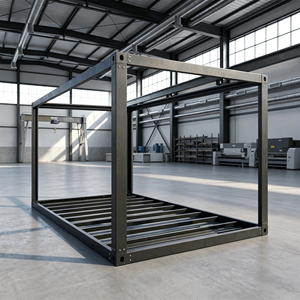
Leading offsite manufacturers have transcended basic steel frame boxes, integrating high-end architectural aesthetics with industrial-grade civil engineering standards. Standardized production protocols incorporate:
2. Enterprise Manufacturing Excellence & Technical Benchmarks
When selecting a primary supplier or OEM manufacturer for prefabricated backyard pods in China, evaluation must extend beyond initial cost per square meter. Leading factories, such as Josso Group and premier state-of-level modular export hubs, utilize strict quality management systems (ISO 9001, ISO 14001) alongside specialized offsite fabrication technologies.
| Performance Metric | Standard Commercial Pod | Industrial-Grade Custom Pod | Compliance Standard |
|---|---|---|---|
| Structural Frame Steel | Light Cold-Rolled Steel (1.8 - 2.2mm) | Heavy Q355 Hot-Dip Galvanized (3.0 - 4.5mm) | GB/T 13793, ASTM A36 |
| Wind Load Capacity | Grade 10 (Up to 100 km/h) | Typhoon Grade 12 - 14 (Up to 180 km/h) | EN 1991-1-4, AS/NZS 1170 |
| Seismic Resistance | Magnitude 7.0 Rating | Magnitude 8.5+ Structural Integrity | GB 50011-2010, IBC Code |
| Wall Thermal Core | 50mm EPS Sandwich Panel | 75-100mm High-Density PIR / Rockwool Core | EN 13165, ASTM C591 |
| Glazing System | Single Tempered Glass | Double Low-E Argon-Filled 6mm+12A+6mm Glass | SGCC, CE EN 12150 |
| Expected Service Life | 15 - 20 Years | 30 - 50+ Years (Permanent Structure) | ISO 15686 Offsite Protocol |
Architectural Customization & Modular Flexibility
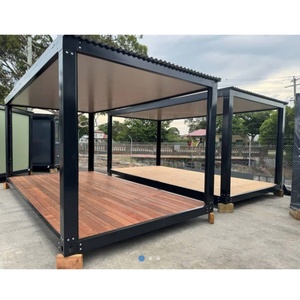
Modern backyard pods are no longer rigid rectangular boxes. Today’s premier Chinese suppliers offer unprecedented architectural customization. From curved panoramic glass facades, integrated timber composite cladding, and hidden rainwater gutter systems to smart home IoT automation, every unit can be tailored to the end-user's specific aesthetic and functional requirements.
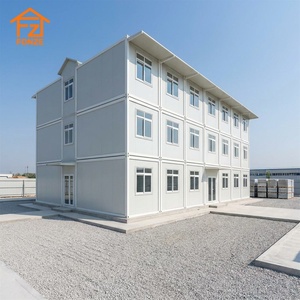
Furthermore, modular pods are designed for offsite plug-and-play installation. Plumbing, electrical wiring (conforming to UL, SAA, or CE standards), and ventilation systems are pre-installed and tested within the factory environment, reducing on-site trade labor requirements by up to 85%.
3. Strategic Market Trends & Future Procurement Outlook (2025–2030)
Understanding emerging market shifts is crucial for importers, developers, and distributors looking to maintain a competitive market edge. The global modular backyard pod sector is undergoing four pivotal transformations:
Trend 1: The Transition to Net-Zero & Circular Building Envelopes
Carbon taxes and green building certifications (such as LEED, BREEAM, and Green Star) are compelling buyers to demand net-zero operational capability. Chinese manufacturers are responding by embedding flexible photovoltaic (PV) solar roofs, integrated battery storage systems, and greywater recycling circuits directly into prefabricated pod structures. The integration of high-density PIR insulation and thermal-break aluminum window frames ensures that operating energy consumption is minimized by over 60% compared to traditional annex structures.
Trend 2: Plug-and-Play Smart Office & Multi-Functional Living Units
The post-pandemic normalization of remote work and hybrid business models has fundamentally altered backyard space usage. Backyard pods are increasingly specified as dedicated acoustic office pods, soundproof music studios, wellness saunas, or independent guest houses. Integrated features now include app-controlled radiant floor heating, motorized blinds, acoustic wall paneling (NRC rating > 0.85), and smart climate control units pre-wired for instant grid or off-grid connection.
Trend 3: Hybrid Material Fabrication (Steel + Glulam Timber / Aluminum Alloy)
While structural steel forms the structural spine of container-style and flat-pack pods, high-end residential buyers demand warm organic aesthetics. Strategic manufacturers are adopting hybrid material construction—combining heavy galvanized steel chassis with exterior engineered thermowood cladding, aluminum composite panels (ACP), and bamboo-fiber interior finishes. This delivers the structural strength of industrial steel paired with the architectural beauty of modern Scandinavian timber designs.
Trend 4: Flat-Pack Engineering for Optimized Shipping Logistics
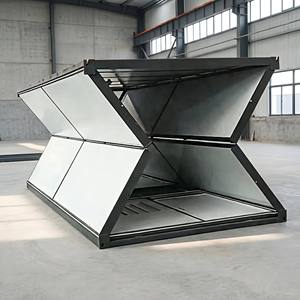
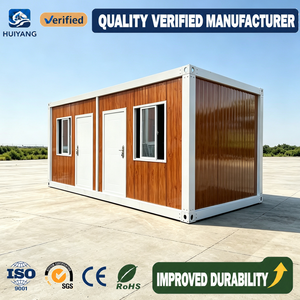
Maritime freight costs remain a critical variable in international B2B procurement. Advanced engineering has led to the proliferation of high-density flat-pack systems and expandable container technology. A single 40ft High Cube (40HC) ocean shipping container can accommodate up to 4 to 6 flat-pack backyard pod units, or 2 fully expanded luxury villas. This logistically optimized packaging drastically lowers per-unit ocean transport costs, allowing buyers to maximize import margins.
4. Frequently Asked Questions (FAQ) for B2B Procurement
Navigating cross-border procurement of prefabricated modular structures requires technical clarity. Below are answers to the most common questions raised by commercial buyers, importers, and project developers.
Partner with China’s Leading Prefabricated Pod Manufacturer
Looking for direct factory pricing, custom OEM CAD engineering, or wholesale distribution partnerships? Connect directly with our engineering team today.
Inquire Now