Engineered Modular Container Solutions
Explore our robust, scalable, and high-performance prefabricated container units custom manufactured for commercial, industrial, and residential deployments.
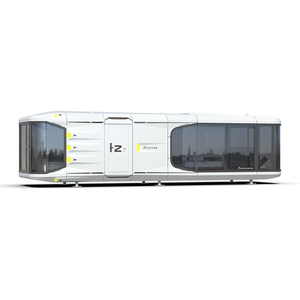
Zcamp Z7 Prefabricated Modular Flat Pack Container House
Heavy-duty structural framework, rapidly deployable for resort cabins, temporary housing, and remote living quarters.
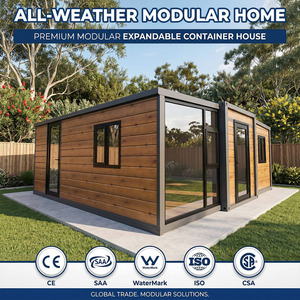
Expandable Modular Mobile Container Villa & Hotel Suite
Innovative dual-wing hydraulic/manual expansion system maximizing usable floor space for commercial hospitality application.
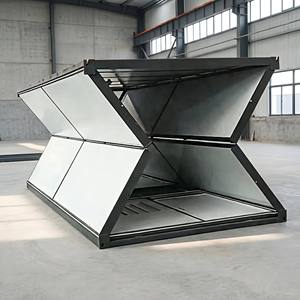
Z-Type Heavy Duty Foldable Ship-Ready Container House
Ultra-compact logistics footprint with 10-minute setup capability, designed for high-density transport and fast emergency shelter deployment.
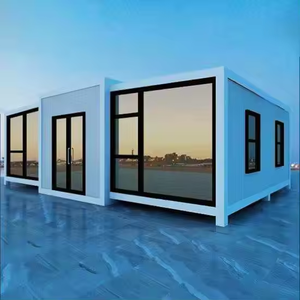
Architectural Luxury Prefabricated Villa Container System
Customized high-grade insulation, floor-to-ceiling thermal glazing, and premium modern architectural facade options.
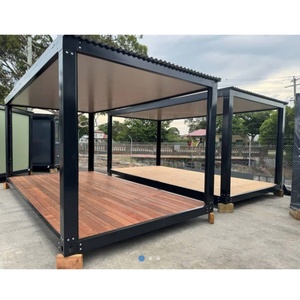
20ft Heavy Duty Steel Structure Modular Container Frame
Galvanized high-yield structural steel skeleton engineered for multi-story stacking and rigorous industrial load demands.
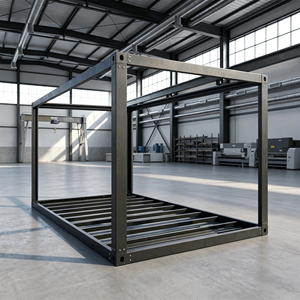
Outdoor Disassemblable Flat-Pack Container Structure
Weather-proof C5-I anti-corrosion coating, tailored for harsh environmental conditions, mine site offices, and outdoor camps.
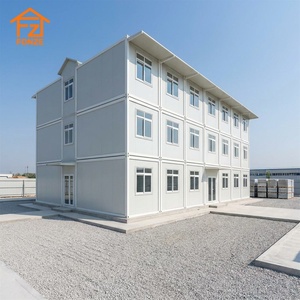
Modular Disaster Relief & Temporary Housing Flat Pack
Modular rapid-build units standardized for intermodal freight, minimizing shipping logistics costs for humanitarian projects.
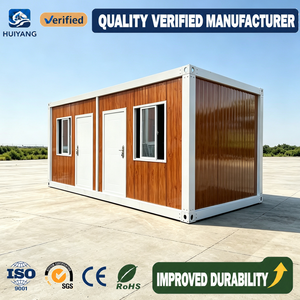
Customized Eco-Friendly Residential Container Unit
Energy-efficient modular apartment units engineered with eco-certified thermal materials and integrated smart systems.
Whitepaper: Industrial Engineering & OEM/ODM Manufacturing Excellence
In the contemporary global infrastructure and modular construction sector, demand has fundamentally shifted from temporary shelters to high-precision, structural-grade modular systems. As a premier OEM/ODM Heavy Duty Modular Container Manufacturer and Supplier, our manufacturing philosophy unites advanced structural metallurgy, offsite prefabrication discipline, and tailored architectural customization.
Unlike standard lightweight flat-packs, heavy-duty modular container units are structural engineering assets built to sustain multi-story stacking, extreme climatic stresses, dynamic transport loads, and stringent regional building codes (including Eurocodes, IBC, and Australian Standards).
1. Metallurgy & Structural Frame Engineering
The foundation of structural longevity rests upon material selection and weld-integrity. Our heavy-duty container frames utilize cold-formed, high-tensile Q355B structural steel profiles subjected to hot-dip galvanization (minimum 275g/m² zinc coating). This prevents subsurface oxidation even in saline coastal environments (classified under C5-I corrosive atmospheric standards).
- Corner Castings: ISO 1161 compliant drop-forged structural steel corner castings welded via automated robotic MIG systems.
- Integrated Drainage: Hidden interior roof beam gutters equipped with 4-corner downspout channels capable of handling precipitation loads exceeding 150 mm/hr.
- Floor Joist Deflection Limits: Sub-floor structural beams engineered to achieve L/360 deflection thresholds under a static live load of 3.5 kN/m².
2. Advanced Thermal Enclosure & Acoustic Systems
Thermal bridge elimination is vital for operational energy efficiency. We deploy multi-layered Structural Insulated Panels (SIPs) utilizing high-density Rockwool (120kg/m³), Polyisocyanurate (PIR), or Polyurethane (PU) core configurations. Wall and ceiling panels are engineered to achieve thermal transmittance values (U-Values) as low as 0.18 W/m²K, permitting operational integrity across temperature ranges from -40°C to +50°C.
All OEM structural frame variants undergo computer-simulated Finite Element Analysis (FEA) to verify structural stress distributions under wind uplift, snow load accumulation (up to 1.5 kN/m²), and multi-tier stacking forces (up to 3-high fully loaded stacks without external scaffolding).
3. Full Spectrum OEM/ODM Customization Matrix
Our OEM/ODM manufacturing capability enables complete modular flexibility for turn-key projects, EPC contractors, commercial distributors, and government procurement bodies.
OEM/ODM Structural Specification Matrix
| Specification Parameter | Standard Flat-Pack Container | Heavy Duty OEM/ODM Modular Unit | Hybrid Architectural Unit |
|---|---|---|---|
| Main Frame Steel Thickness | 2.0mm - 2.5mm Formed Steel | 3.5mm - 4.5mm Hot-Dip Galvanized | 4.0mm - 6.0mm Structural Tube Frame |
| Fire Resistance Rating | Class B1 (Combustible Core) | Class A1 Non-Combustible (Rockwool Core) | Class A1 / Composite Thermal System |
| Acoustic Insulation Index | 28 dB - 32 dB | 42 dB - 50 dB (Multi-layer Wall Assembly) | 45 dB - 55 dB Triple-Glazed System |
| Stacking Capacity | 2-Tiers Max | 3-Tiers Fully Loaded (Self-Supporting) | 4+ Tiers with Structural Column Tie-ins |
| Service Life Expectancy | 15 - 20 Years | 35 - 50+ Years (ISO Maintenance Schedule) | 50+ Years Structural Guarantee |
Why Global Procurement Leaders Partner With Us
Rigorous quality control, offsite prefabrication efficiency, and global logistic optimization.
Offsite Prefabrication Excellence
Up to 90% of interior fit-out, MEP (Mechanical, Electrical, Plumbing) rough-ins, and structural finishing are completed within our automated manufacturing facility, reducing on-site construction timelines by over 50%.
Rigorous Quality Assurance
Every batch of raw structural steel undergoes ultrasonic flaw detection, coating thickness verification, and hydrostatic seal tests to guarantee compliance with ISO 9001 and CE structural directives.
Logistics & Flat-Pack Knock-Down
Engineered for maximum shipping cube efficiency. Our flat-pack system allows up to 4 complete standard units or 12 disassembled frames to be packed into a single 40ft HQ ocean container, drastically reducing sea freight expenditures.
Future Procurement & Technological Trends in Modular Construction
The global modular building market is undergoing rapid evolution, driven by labor shortages in traditional construction, strict ESG (Environmental, Social, and Governance) targets, and the imperative for rapid urban infrastructure deployment. Understanding these forward-looking procurement dynamics is essential for developers, general contractors, and B2B buyers.
1. Decarbonization and Circular Life-Cycle Assessment (LCA)
Future-proof procurement strategies prioritize low embodied carbon materials. Modern heavy-duty modular containers are inherently circular: over 95% of the structural steel frame is fully recyclable at end-of-life. Furthermore, offsite modular fabrication generates up to 70% less material waste on-site compared to cast-in-place concrete structures. Procurement teams are increasingly specifying zero-VOC interior coatings, bio-based insulation matrices, and integrated photovoltaic (PV) roofing skins.
2. BIM Integration and Digital Twin Manufacturing
The convergence of Building Information Modeling (BIM) level 3 with automated CNC production lines permits seamless conversion of architectural drawings directly into manufacturing G-code. This eliminates dimensional mismatches on-site, enables precise pre-plumbed MEP connections, and allows buyers to review dynamic Digital Twins of their modular structures prior to physical fabrication.
3. Smart Modular Buildings & IoT Integration
Modern commercial modular units are no longer static shells. Current procurement trends show rising demand for factory-integrated IoT sensors that monitor structural vibration, moisture ingress, thermal efficiency, and occupancy energy usage in real-time. OEM manufacturers providing factory-embedded conduit channels for smart HVAC, security, and automated power management hold significant market advantage.
Frequently Asked Questions (Procurement & Engineering FAQ)
Technical insights addressing key buyer concerns during modular container sourcing.
Ready to Engineer Your Next Modular Project?
Connect with our structural engineering team to request technical schematics, CAD models, BIM files, and direct OEM factory quotation pricing.
Get Catalog