Offsite Modular Construction Dynamics in Metropolitan Mexico City
The Mexico City Metropolitan Area (Zona Metropolitana del Valle de México - ZMVM) presents a unique structural and logistical landscape. Situated at an elevation of 2,240 meters above sea level and positioned across complex geological zones—ranging from hard basaltic rock in the southern highlands to deep lacustrine soft clay beds in ancient lake basins—construction engineering in CDMX demands rigorous adherence to structural mechanics, seismic wave attenuation, and rapid assembly methodologies. As one of North America's foremost economic and industrial epicenters, Mexico City is experiencing an unprecedented surge in demand for industrial real estate, urban infrastructure expansion, and commercial satellite offices, largely accelerated by the USMCA (T-MEC) nearshoring transition.
This technical publication examines the procurement, engineering, and deployment of Pre-Engineered Modular Buildings and Flat-Pack Container Structure Systems. Manufactured under controlled offsite factory parameters and exported directly to Mexico City project sites via optimized logistics corridors, these modular systems provide high structural ductility, rapid site commissioning, zero-waste environmental footprints, and full compliance with the Reglamento de Construcciones para el Distrito Federal (RCDF) and its updated Technical Complementary Norms (Normas Técnicas Complementarias - NTC-2023).
Featured Pre-Engineered Modular Building Systems
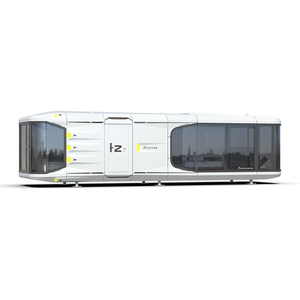
Zcamp Z7 Prefabricated Modular Portable Flat Pack Container House
Integrated expandable steel frame modular house optimized for quick site deployment in urban and suburban developments. Features heavy-gauge galvanized steel chassis and polyurethane structural insulation panels.
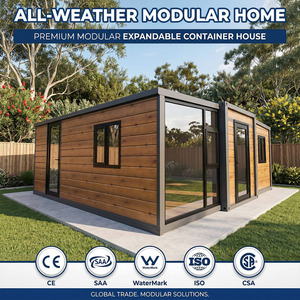
Container House Prefabricated Home Expandable Modular Mobile Villa
Luxury dual-wing expandable modular villa designed for resort development, administrative hubs, and eco-housing projects. Includes factory-integrated double-glazed low-E window assemblies and integrated electrical channels.
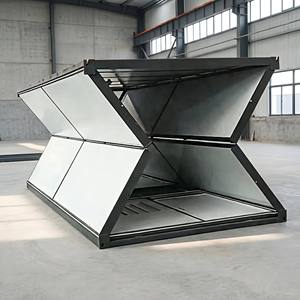
Z-Type Rapid Deployable Foldable Ship Container House
Engineered for immediate disaster relief housing and temporary industrial office setups. Folds down to 420mm height for ultra-dense containerized maritime shipping directly into Mexican ports.
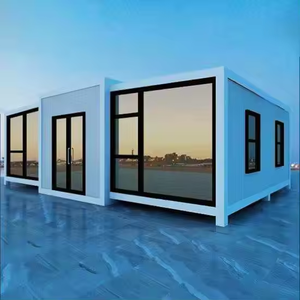
Cost-Optimized Heavy Steel Frame Prefabricated Modular Villa
Architectural-grade multi-story container villa system engineered for commercial pop-ups, sales centers, and high-end suburban residences in the Valley of Mexico region.
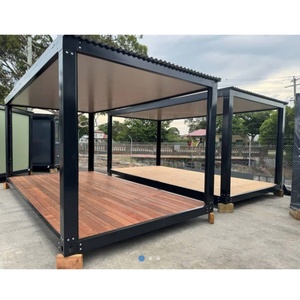
Prefab Detachable 20ft Structural Steel Modular Frame Chassis
Bare high-strength structural frame kit for custom local fitting. Allows developers and EPC contractors in Mexico to install customized architectural walls, glass curtain facades, and specialized utilities.
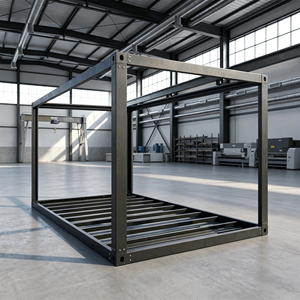
Disassemblable Outdoor Flat-Pack Modular Building Frame
Heavy-duty disassemblable modular framing system engineered for extreme climate performance, high UV exposure at high altitudes, and stackable configuration up to 3 floors.
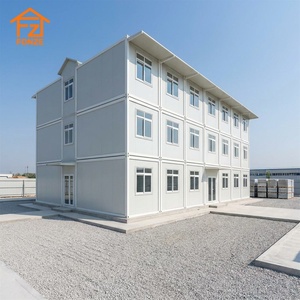
Flat Pack Container Home for Temporary Site & Relief Housing
Standardized 20ft modular flat-pack unit equipped with integrated ceiling panels, pre-wired electrical circuits, and waterproof vinyl flooring. Standardized for municipal workforce housing.
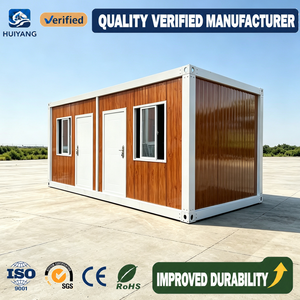
Customized Eco-Friendly Modular Office & Residential Apartment Unit
Sustainable modular unit featuring non-toxic acoustic wall cores, low-emissivity structural glazing, and solar photovoltaic integration compatibility. Ideal for modern urban commercial hubs.
Urban & Industrial Application Scenarios in Central Mexico
Pre-engineered modular buildings provide solution-specific engineering tailored to the distinct economic corridors and geographical zones across Mexico City and the surrounding State of Mexico (Estado de México).
Vallejo Industrial Redevelopment Corridor & Logistics Hubs
In established industrial districts like Industrial Vallejo (Azcapotzalco) and major logistics hubs along the Circuito Exterior Mexiquense (Cuautitlán Izcalli, Tlalnepantla, and Tepotzotlán), industrial real estate footprint is at a premium. Pre-engineered modular offices, security dispatch centers, and worker canteens can be stacked up to three stories within existing warehouse plots without requiring invasive foundation work. The lightweight ductile steel frames minimize soil overburden on alluvial ground while delivering high structural capacity.
High-Density Commercial Infill in Santa Fe, Polanco & Reforma
Commercial real estate in financial districts such as Santa Fe, Insurgentes Sur, and Polanco requires fast-to-market architectural solutions. Customized modular units serve as luxury pop-up retail showrooms, modern outdoor café modules, and temporary corporate sales offices. Factory-fitted double-glazed Low-E facades and premium interior wall panels ensure high sound attenuation (STC 45+) in busy urban environments, reducing street noise while maintaining thermal comfort under high altitude solar radiation.
Soft Clay Soil Foundations (Ancient Lakebed Zone III - Iztapalapa & Lake Texcoco)
Deploying conventional concrete structures in Mexico City’s Geotechnical Zone III (Soft Lakebed Clay) leads to severe differential settlement over time. Pre-engineered modular container units exert a fraction of the dead load of reinforced masonry (approx. 35-45 kg/m² vs 250+ kg/m²). This enables lightweight raft or helical screw pile foundations in boroughs like Iztapalapa, Venustiano Carranza, and Tláhuac, reducing foundation preparation costs by up to 60% while mitigating seismic shear forces.
Ecotourism & Agricultural Hubs (Valle de Bravo, Ajusco, Xochimilco)
For eco-resorts, research cabins, and suburban retreats in eco-sensitive mountainous regions surrounding the Valley of Mexico (e.g., Ajusco, Malinalco, and Valle de Bravo), modular offsite units prevent ecological disruption during site work. Units arrive 90% pre-assembled, featuring integrated off-grid solar roof mounts, greywater recycling loops, and high-performance polyurethane core insulation designed for cold alpine microclimates.
Localized Market Drivers & Regulatory Compliance in Mexico
1. USMCA Nearshoring and the Industrial Infrastructure Shortage
The relocation of global manufacturing chains into North America under the USMCA framework has driven industrial warehouse vacancy rates in the Valley of Mexico to historic lows (under 1.5%). International manufacturing conglomerates and third-party logistics (3PL) providers require immediate administrative, operational, and residential facilities. Traditional concrete and brick-and-mortar construction timelines (12–18 months) create costly commissioning bottlenecks. Pre-engineered modular building systems reduce site installation times to under 30 days, allowing enterprises to capitalize on operational permits swiftly.
2. Seismic Engineering under RCDF and NTC Structural Standards
Mexico City experienced catastrophic seismic events in 1985 and 2017, leading to structural code overhauls under the Normas Técnicas Complementarias para Diseño por Sismo (NTC-2023). Modular steel structures possess inherent performance advantages during high-magnitude earthquakes:
- High Ductility & Energy Dissipation: Cold-formed galvanized steel profiles (Q235B/Q355B) yield elastically under cyclic lateral loads, preventing catastrophic brittle shear failure seen in unreinforced masonry.
- Moment-Resisting Corner Castings: Heavy-duty ISO standard corner castings bonded with high-tensile bolt assemblies allow controlled inter-story drift without joint fracture.
- Reduced Mass Dynamic Shear: Because seismic inertial forces are directly proportional to structure mass, the reduced dead-weight of modular panels drastically decreases total base shear forces exerted on the building core.
3. Sustainability Standards (EDGE & LEED Mexico Certification)
With Mexico City municipal authorities prioritizing water conservation and carbon emission reductions, commercial developments increasingly require EDGE (Excellence in Design for Greater Efficiencies) or LEED certification. Factory-controlled modular construction reduces construction waste by up to 90%, uses recyclable structural steel, and incorporates zero-ODP polyurethane thermal cores that reduce thermal transmission (U-value < 0.35 W/m²K), dramatically lowering air conditioning electricity consumption during hot dry seasons (March–May).